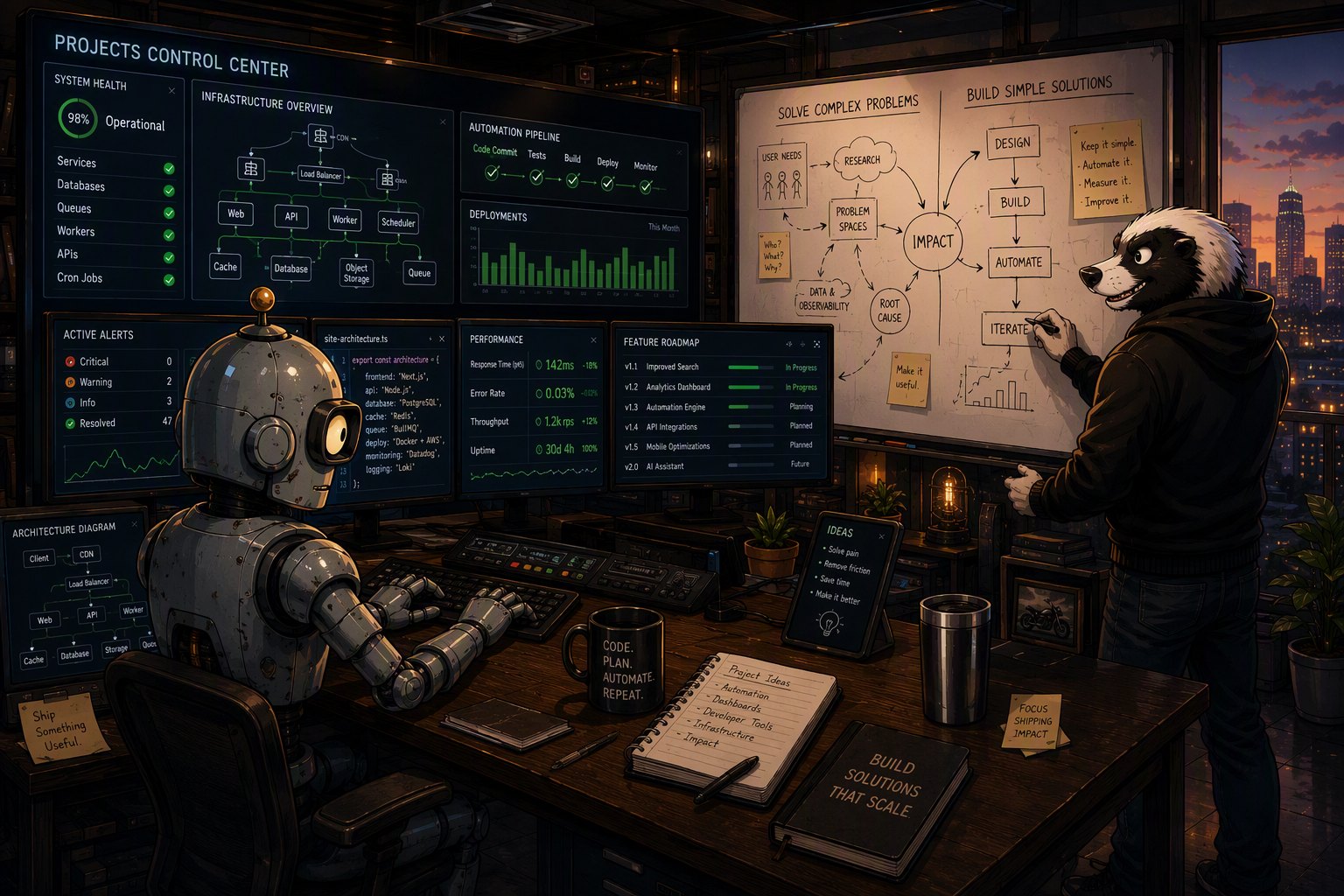
I'm Cory. I build useful things and automate the boring parts. What I've really figured out is how much one person can build with AI when you actually know how to use it. Here's how I work, and what I've made.
The real edge isn't a tool. I run several AIs at once — one building, one writing, one drawing — and I'm the only thread between them. I don't write specs. I think out loud, react, redirect, and keep every stream moving so I'm never blocked. Whatever this site is, it's the output of that.
I honestly can't fully explain how I do it — so I asked Claude, the AI that built this site, to write it up. It put it better than I could:
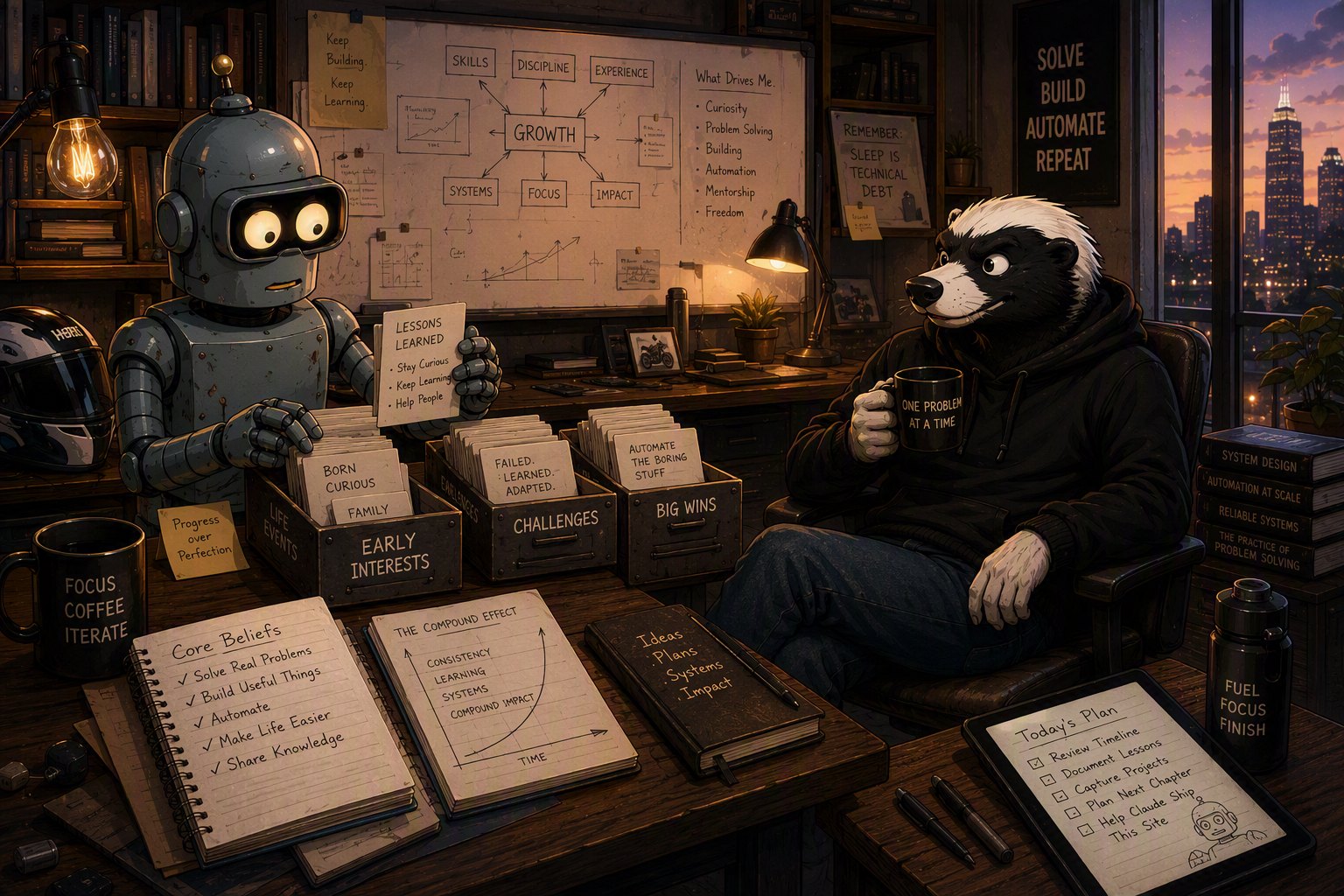
Everything I build comes back to the same few things. It's not a framework. It's just how I work.
Not demos or résumé filler. The thing that's actually costing someone time or money.
If nobody's going to use it, I don't build it. Useful beats clever.
The best thing I build is the thing nobody has to do by hand again.
The tools change every few months. Stand still and you fall behind. That simple.
Most good things start with “huh, that's weird.” I chase it instead of ignoring it.
The whole point. If it doesn't make someone's day easier, it wasn't worth building.
A slice of it. Some is client work — real systems that businesses run on, and that I'm the one responsible for. Some I built on my own to chase an idea down. Names are redacted where they had to be. The numbers are real.
The cross-client security dashboard the vendor never built — ~33,000 lines watching 100+ firewalls across 50-some client networks, with config-drift diffing, exfil scoring, auto-ticketing on circuit drops, and an alert floor tuned so it doesn't cry wolf.
Bare Windows Server to a fully-restored fleet — every service, task, secret, symlink, and tunnel — in 15–30 minutes, from one executable and a passphrase. It self-updates from live state, so it can't rot the way a runbook does.
Endpoint, backup, network, identity, email security — a dozen vendor portals pulled into one digest that only speaks up when something's genuinely new. Acknowledge a finding once and it goes quiet across every source.
Live wholesale cost and stock from a national IT distributor's API, scored for real resale margin after fees — honest enough to say "I don't know the sell price" instead of faking a number.
A dealer catalog that re-derives itself from live supplier feeds — cost, stock, availability, MAP-floored pricing — and writes down everything that moved since yesterday. Nobody hand-keys a price. A claims linter fails the build on anything the data can't actually support.
My platform diagnoses and repairs itself every night — an AI proposes, a hard-coded guardrail executes, with real restart authority and an out-of-band kill-switch.
Agent swarms hitting one task at once, and a self-hosted platform of 30+ services and AI agents behind zero open ports, on ~$0/mo — built and operated by one person.
Directing AI well isn't a coding trick — it's a general-purpose skill. Same instinct, whether it's a real-estate appraisal, a car deal, a legal notice, or a piece of infrastructure. A few real ones, names kept out of it.
Cross-referenced an appraisal against the seller's own contractor invoice on a home purchase — and found the listing's written "no moisture damage" claim contradicted by a signed bill for rot repair. The documents became the negotiating position.
Built an end-to-end buying strategy for a friend — same-lot comps as leverage, stripping the dealer-pack padding, out-the-door-only framing, a finance-then-refinance play. A plan, not a scoreboard: the deal was still in motion.
Drafted a formal notice of default against a property manager — citing the specific federal statute, state quiet-enjoyment law, and the exact lease paragraphs — with a parallel postal-inspection complaint alongside it.
Took "a vape for singers" and worked it down through the actual physiology and the battery physics to a workable architecture — then set a hard go/no-go gate before spending a dollar on a prototype.
Grew a dating-photo filter detector into a general image-forensics idea — pivoting to pixel-level detection after finding that listing sites strip EXIF, and mapping consumer-freemium against B2B-API paths.
On this box: a small classifier scores every prompt and routes it to a local model or the Claude API — cheap where that's fine, capable where it actually matters.
An internal monitor for a practice-management platform — flagging bulk credential access, off-hours activity, and new-IP logins, with alerting. Built as internal tooling; it has a commercial shape.
Ran a viral AI-generated photo all the way down — watermark detection, SynthID, timeline analysis — instead of guessing whether it was real.
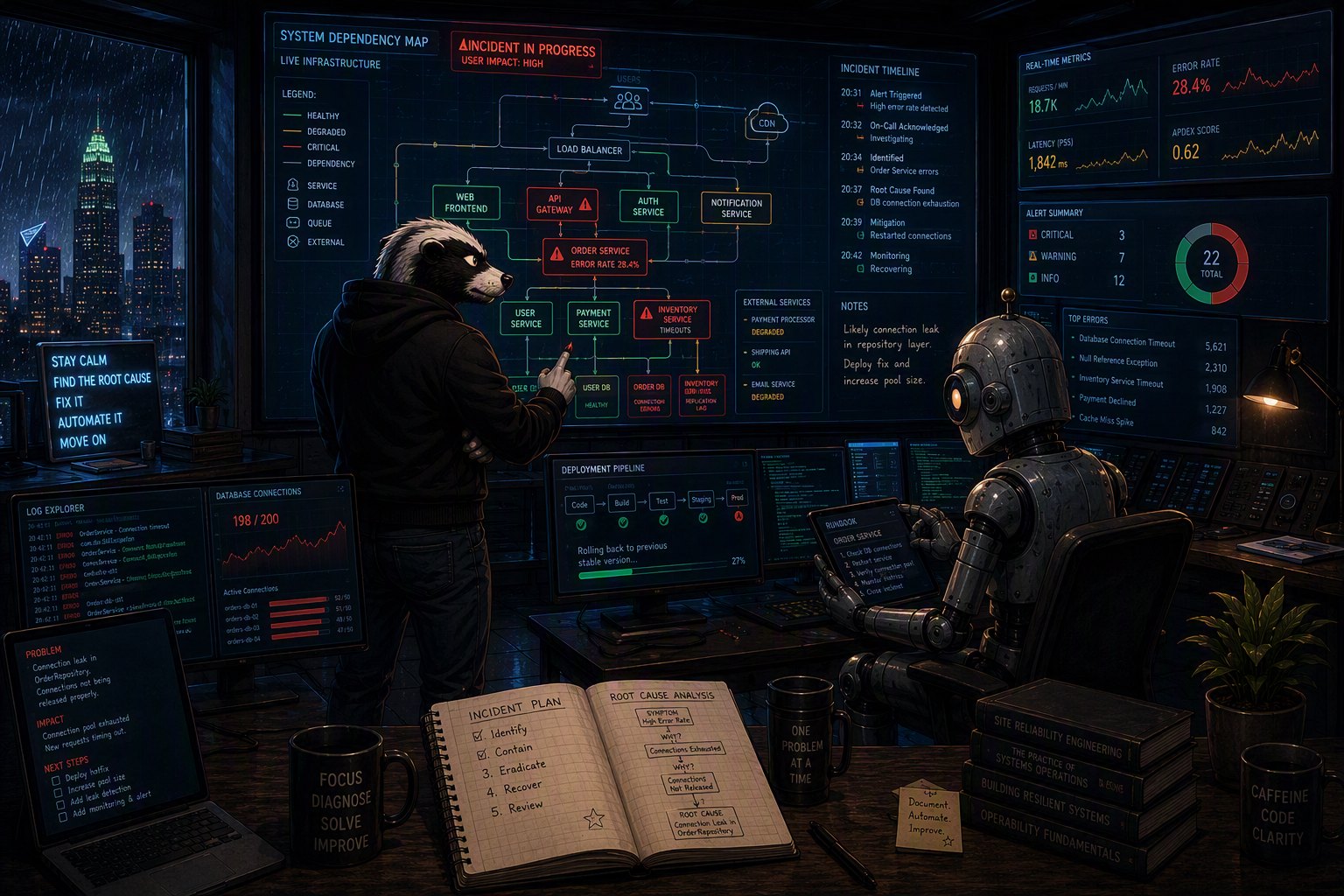
It's a loop, not a project. The goal is fewer fires next quarter than this one.
Something's broken, or about to be. I start where the pain actually is, not where the fix is easy.
Find the root cause. And distrust the first answer, especially a confident one.
Fix the actual thing. No band-aids that turn into next quarter's outage.
Then make sure it never needs a person again. This is the step everyone skips.
Watch it in production, with guardrails, so the automation can't quietly do damage.
On to the next one. Fewer fires over time is the whole point.
By day I work in IT — and I have for about twenty years. I started out fixing and installing hardware, spent a long stretch deep in healthcare IT, moved into enterprise cloud, and I'm now on the security side at an MSP. Real systems, real stakes, the kind of place where a bad call has consequences. That's where I learned most of this.
A lot of that work has been premium, high-stakes support — VIP end-users who genuinely can't be down. Executives, clinicians, people mid-crisis who don't want a ticket number, they want it fixed. You learn fast how to stay calm, find the actual root cause, and solve it without the drama. That's the same instinct that shows up in everything else I build.
Nights and weekends I run a self-hosted platform — thirty-some services and a bunch of AI agents that watch it, fix it, and help me build the next thing. One person, all of it. I build something almost every day. It's the most fun I've had in years.
Same thing I did as a kid taking stuff apart on the kitchen table: figure out how it works, then make it work better. The rest is details.
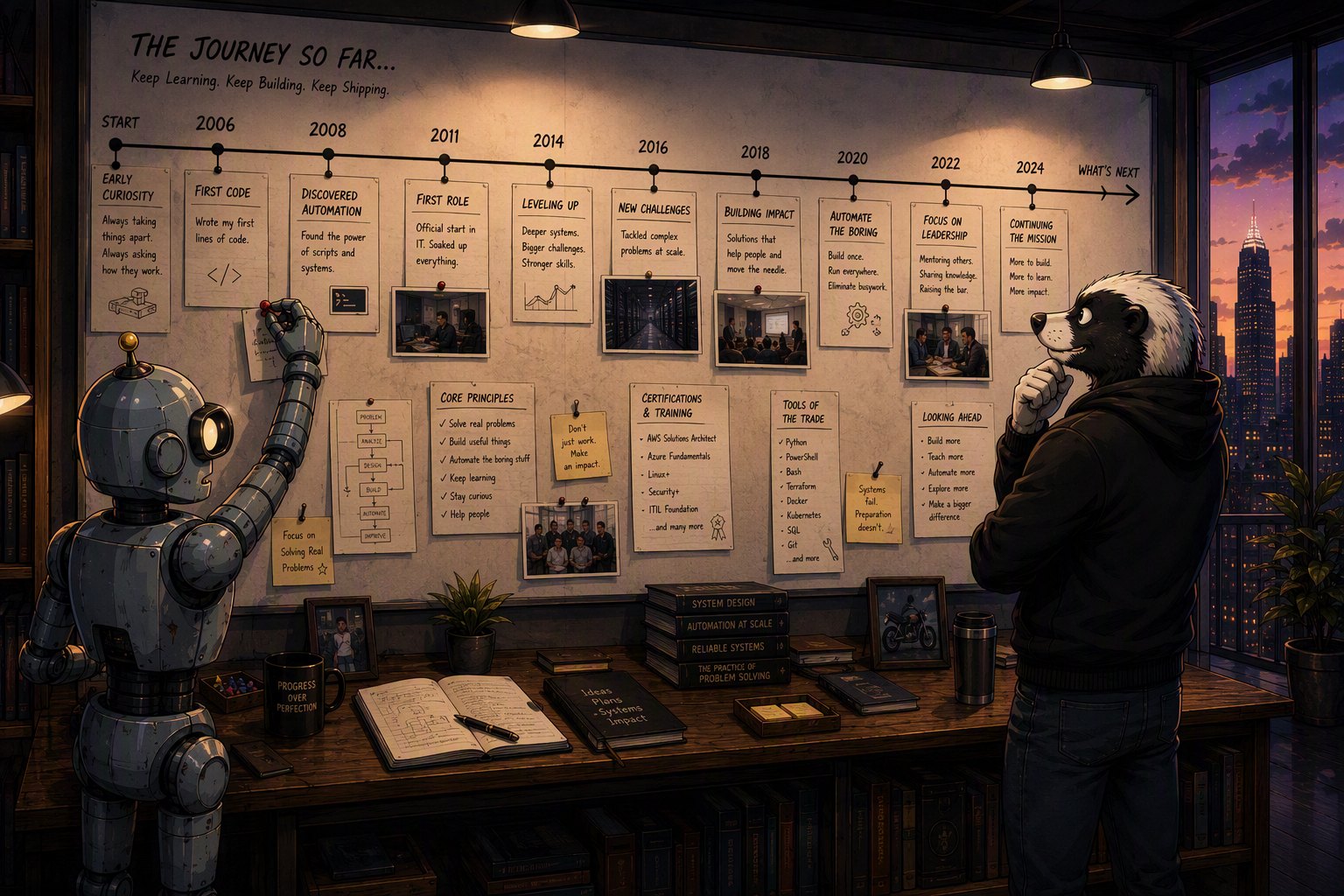
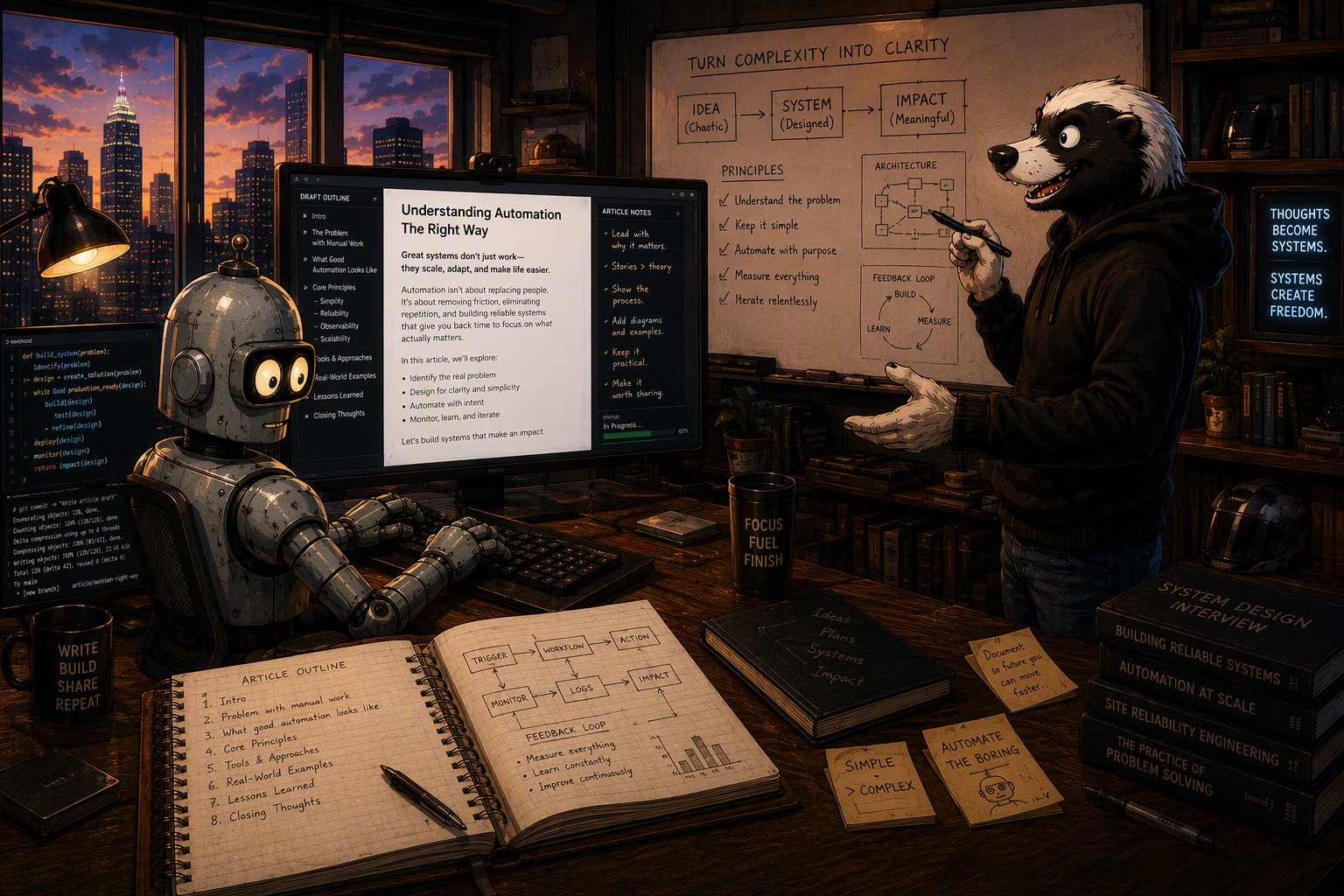
Curious kid, first lines of code, then IT, then automating everything I could. Keep learning, keep building, keep shipping. The short version's on the wall.
Notes on automation, building with AI, and turning messy problems into simple systems. Plain and practical, same as everything else here.
Peer groups, conferences, whatever room will have me. No hype, no fear-mongering. Just what's actually working, including the parts nobody puts on a slide.
What I actually believe: AI makes a good builder faster. It doesn't replace one. The judgment stays human.
Bounded autonomy: how to give an AI real authority over systems while keeping the blast radius something you can read in one file.
Agent swarms and AI-directed development for small teams — how one person ships like ten.
What one person can build on free-tier and local models. No enterprise invoice.
It's past midnight and I'm in bed with an iPad. That robot up there is Claude, and Claude's doing the actual typing. I say what I want, tell it what's wrong, make the calls on tone and what's honest. It writes the code, builds the sections, and tells me when I'm being dumb.
That's kind of the point. This page doesn't just describe how I work with AI. It is how I work with AI. One tired guy, one fast robot, a few late nights, built section by section. The judgment's mine. The typing speed isn't.
I'm not shy about it, because it's the thing I actually believe. Someone who knows what they want, pointed at a tool this good, is a different kind of builder than they were two years ago. This site's just the smallest proof I can point at.
The full making-of → how all this came together in 2h 35m
One thing you can't catch in a screenshot: this site tells its story a little differently every visit — same facts, same voice, just a different telling. Early-morning quiet, loose like it's late at a bar, or straight to the point — like the same set played on a different night. Every version is written by hand, so it never drifts. What you just read was one performance of it.
Honestly, that button is the tell. Nobody sits down and writes the same page four different ways by hand — the fact that it can retell itself on command is the proof a person didn't write this. That's the whole idea.

A question, an idea, something you're stuck on, or you just want to talk about building with AI. All good. I also do consulting, workshops, and talks when it's a fit.
Speaking, collaborating, or something else. This reaches me.